Edward Low
History · sources at the end · the game’s fiction is kept separately
Even other pirates thought he went too far.
| Born | Westminster, London, about 1690 |
| Active | 1722–1724 |
| Ships | Rose Pink, Fancy, Merry Christmas and others |
| Died | Unknown; possibly hanged by the French at Martinique |
From Boston to the sea
Johnson’s General History says Low grew up a thief in Westminster, then went to New England, where he married in Boston. After his wife died he sailed to the Bay of Honduras to cut logwood. In late 1721 or early 1722 he turned on his ship’s captain, fled with a few men in a small boat, and began taking ships.
Cruelty
Low sailed for a time with George Lowther, then on his own. Between 1722 and 1724 his crews took well over a hundred vessels, from Newfoundland and New England to the Azores, West Africa and the Caribbean. Johnson and the newspapers of the day describe torture and murder of captives. Some of the stories are surely exaggerated, but Low’s name was a byword for cruelty even among sailors who knew pirates well.
An unknown end
In June 1723 the warship HMS Greyhound caught his consort under Charles Harris, and its crew were hanged at Newport, Rhode Island. Low escaped. After 1724 he disappears. One account says his crew set him adrift and the French hanged him at Martinique, but no one knows for sure.
His flag and his ships
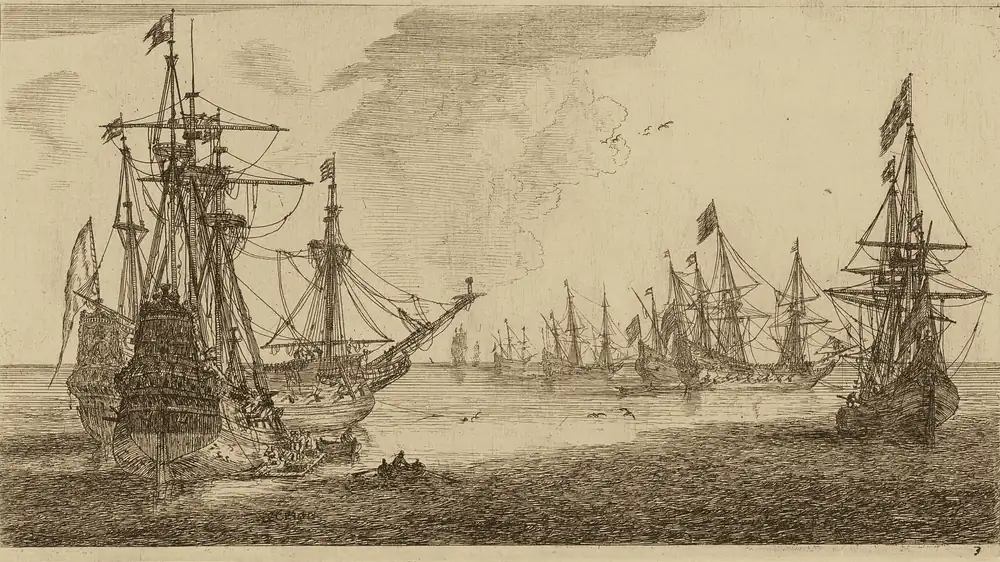
Low is said to have flown a black flag with a red skeleton. Like most flag stories, that comes from later writers more than from eyewitnesses (see the Jolly Roger). He changed ships often, taking a better vessel when he could and burning or abandoning the last. The Rose Pink was a pink, a narrow-sterned merchant ship. The Fancy was a captured Portuguese vessel. On a Christmas Day the crew renamed one prize the Merry Christmas.
How the age ended
Low belongs to the last wave of the Golden Age. By 1722 the Royal Navy had more ships in the Caribbean and off West Africa. Colonial courts were hanging pirates in batches, and newspapers printed every atrocity. Low’s crews were drawn partly from men forced off captured ships, and several later said so at their trials. The mass hanging of Harris’s crew at Newport in July 1723, where twenty-six men died, was one of the largest in colonial America. After 1726 large-scale Atlantic piracy was over. See the Golden Age overview and timeline.
Reputation
Historians still argue about how much of Low’s cruelty is fact and how much is newspaper horror. Marcus Rediker reads the violence as part of a wider war between pirates and the officers and captains they hated. Other writers stress that Low’s crimes were reported by many independent witnesses. Either way, he is the opposite of the bargaining, show-mercy pirate captain of legend.
In the game
He is the Hard opponent at Tavern Draughts. Hard is the only level where you can wager tavern silver.
Sources and further reading
- Captain Charles Johnson, A General History of the Pyrates (London, 1724). Project Gutenberg.
- Marcus Rediker, Villains of All Nations (Beacon, 2004).
- Colin Woodard, The Republic of Pirates (Harcourt, 2007).