George Lowther
History · sources at the end · the game’s fiction is kept separately
A mutiny on the Gambia, two years of mostly bad luck, and an ending nobody saw.
| Active | 1721–1723 |
| Ships | Gambia Castle (renamed Delivery); later the Happy Delivery and the Ranger |
| Known for | The Gambia mutiny; his articles; taking Edward Low into his company |
| Died | Probably late 1723, on Blanquilla off Venezuela |
George Lowther never had a famous flag or a great treasure. What he has is one of the best-documented starts to a pirate career, a set of articles that survive word for word, and the dubious credit of giving Edward Low his start.
Trouble on the Gambia
In 1721 Lowther was second mate of the Gambia Castle, a Royal African Company ship of 16 guns under Captain Charles Russell. She carried a company of soldiers under Captain John Massey to garrison the company’s fort on the Gambia River, which Howell Davis had plundered not long before. They arrived in May 1721, and things went wrong almost at once.
Massey thought the company’s merchants were starving his men, and said so loudly. Russell, meanwhile, had taken against his second mate. When he ordered Lowther punished, the sailors took up handspikes and threatened to knock down anyone who laid a hand on him. After that the mate had the crew and the captain had very little.
Taking the ship
Lowther and Massey had become friends on the voyage out, and between them they made a plan. With Russell ashore, Massey brought the soldiers aboard, Lowther shut up the chief mate, loaded the guns and made the ship ready, and they sailed. Massey seems honestly to have meant to go home to England. Once they were at sea Lowther told the company that what they had already done could not be excused “upon any Pretence whatsoever,” so they might as well “seek their Fortunes upon the Seas, as other Adventurers had done before them.” They knocked down the cabins to make a flush deck, made black colours, and renamed her the Delivery.
The articles they signed and swore to on a Bible are printed by Johnson. The captain took two shares, the master one and a half, and the doctor, mate, gunner and boatswain one and a quarter. A man who lost a limb in action was to get £150 and stay with the company as long as he liked. “Good Quarters to be given when call’d for.” And whoever first saw a sail got the best pistol or small arm aboard her. See Pirate Articles.
Massey did not last. He wanted to go ashore and attack the French settlements, the company split into factions over it, and in the end Lowther let him take a captured sloop and about ten men and go. Massey sailed to Jamaica, gave himself up to the governor, and later sailed home to England, where he was tried at the Old Bailey in July 1723 and, after telling the court rather more than it needed to know, hanged at Execution Dock.
With Edward Low
Around Christmas 1721, stopping for water at Grand Cayman, Lowther met a small vessel with thirteen men aboard who were in the same line of work. Their leader was Edward Low. Lowther took them in and made Low his lieutenant. On 10 January 1722 in the Bay of Honduras they fought the Boston ship Greyhound for an hour. When she struck, they whipped and cut her crew and burned her.
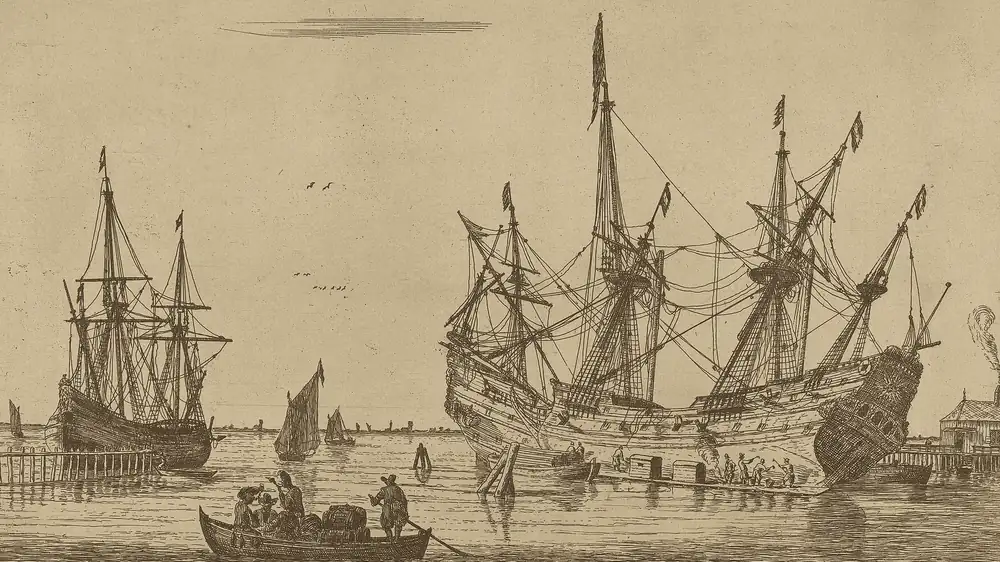
The partnership was short. While the fleet was careening at Port Mayo in the Gulf of Matique, with the ships heeled over and the stores in tents on the beach, a large party of local people attacked. The pirates ran for their sloops, lost the plunder, and burned the Happy Delivery themselves. They went on in a sloop renamed the Ranger. On 28 May 1722, after taking the Boston brigantine Rebecca, the company split by vote. Low took the brigantine and 44 men, and Lowther kept the sloop and the same number. Low went on to be far more notorious than his old captain.
A hard year
Off South Carolina that summer Lowther attacked the ship Amy and got a broadside back. Her captain, Gwatkins, drove him ashore and was rowing in to burn the sloop when a shot from the beach killed him. Lowther’s men got off, badly hurt, and spent the winter in an inlet in North Carolina, hunting cattle and hogs and sleeping in huts. In 1723 they tried the Newfoundland banks and then the West Indies, with thin pickings in between.
Blanquilla
In October 1723 Lowther took his sloop to a small, dry, uninhabited island off the coast of Venezuela that Johnson calls Blanco, now Blanquilla, and put her on the careen. There the Eagle, a South Sea Company sloop out of Barbados under Walter Moore, found her with her guns and sails ashore. The pirates hoisted the St George’s flag at their topmast in defiance, cut their cable and fought, but in the end they called for quarter. Lowther and about a dozen men escaped through the cabin window.
Moore’s men and then a Spanish party combed the island and caught several of them. The prisoners were tried at St Kitts and most were hanged there. Lowther was not found alive. Johnson says “it is said” he shot himself, and was found dead with “a Pistol burst by his Side,” and a London paper reported the same in June 1724. Other reports that spring said he had got away. Nobody knows for certain.
In the game
Careening coves on the Free Nassau chart patch your hull, and they are a good deal safer than Port Mayo or Blanquilla were. See Careening and How to Play.
Sources and further reading
- Captain Charles Johnson, A General History of the Pyrates (London, 1724). Project Gutenberg.
- The Daily Courant, 12 June 1724, report of the Eagle’s capture of Lowther’s sloop.
- Marcus Rediker, Villains of All Nations: Atlantic Pirates in the Golden Age (Beacon, 2004).