Pieces of Eight
History · sources at the end · the game’s fiction is kept separately
The coin every pirate wanted.
| Spanish name | Real de a ocho, a coin worth eight reales |
| Silver | About 27 grams, of high fineness |
| Main mints | Mexico City, Potosí, Lima |
| Value (c.1700) | Roughly four to five English shillings |
| Later | The model for the US dollar |
A piece of eight was the Spanish silver coin worth eight reales. From the 16th to the 19th century it was the most widely trusted coin in the world, used from Boston to Canton. Pirate shares, ransoms and prize accounts were usually reckoned in it.
Silver from the Americas
Spain’s mines at Potosí, in present-day Bolivia, and in Mexico produced enormous amounts of silver. Much of it was struck into coin at colonial mints in Mexico City, Potosí and Lima, then shipped to Spain in the treasure fleets or across the Pacific to Manila. The coin was a convenient size: heavy enough to carry real value, small enough to pass from hand to hand. A sailor’s pay for a month might be counted in a few of them.
Cobs
Most coins of the Golden Age were cobs, made by cutting a slice from a silver bar, trimming it to the right weight and striking it by hand between two dies. They were often irregular in shape, with only part of the design visible. Weight and purity mattered more than looks. Because they were easy to clip, merchants often weighed coins rather than counting them. In 1732 the Mexico City mint began striking round, milled coins with a design of two pillars, the “pillar dollar”, which were much harder to clip.
Why “eight”
The coin was worth eight reales, and it could be cut into pieces to make change. The phrase “pieces of eight” is simply the English rendering of the Spanish name. The later American slang of “two bits” for a quarter dollar comes from the habit of reckoning one real as a “bit”.
Pirates and silver
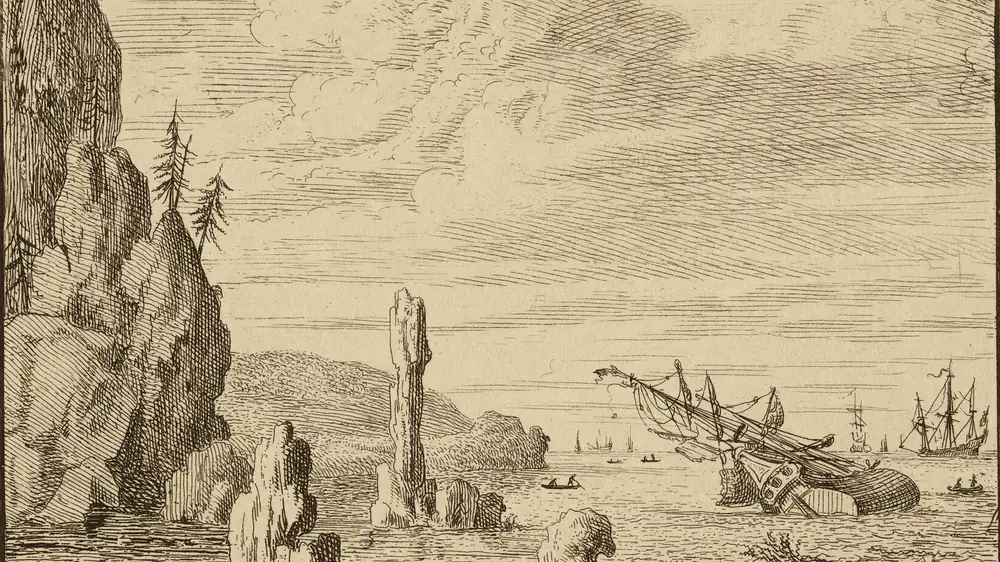
Silver was the ideal pirate plunder. It did not spoil, it could be divided exactly, and it could be spent in any port. The wreck of the 1715 treasure fleet on the Florida coast scattered many thousands of coins, and raids on Spanish salvage camps by Henry Jennings and others helped found the pirate republic at Nassau. Shares under the articles were usually set in pieces of eight. Treasure divers still recover cobs from the 1715 wrecks today.
Counterfeits and clipping
Because the coin was so trusted, it was also forged and abused. In the 1640s the Potosí mint was found to be striking debased coins, a scandal that led to executions and to a rule that later Potosí coins be checked with special care. Merchants everywhere clipped slivers of silver from cobs, so a careful trader carried scales. In British colonies, coins were often valued by weight, and local rates for a piece of eight differed from one colony to the next, which is one reason colonial accounts are hard to compare.
A world currency
Because English colonies minted little coin of their own, Spanish silver was the everyday money of British America. When the United States created its dollar in 1792, it was based on the Spanish coin, and foreign silver coins remained legal tender in the US until 1857. The Chinese yuan and Japanese yen also trace their origins to silver dollars that descended from it.
In the game
Gold and silver prizes in the game are counted in pieces of eight.
Sources and further reading
- Carlos Marichal, “The Spanish-American Silver Peso”, in From Silver to Cocaine (Duke, 2006).
- Robert F. Marx, Shipwrecks in the Americas (Dover, 1987).
- Colin Woodard, The Republic of Pirates (Harcourt, 2007).
- David Cordingly, Under the Black Flag (Random House, 1995).
Category: Law, trade and money · History