Henry Jennings
History · sources at the end · the game’s fiction is kept separately
He sailed with a licence to hunt pirates, and came home with Spanish silver.
| Background | A ship captain with family ties to Bermuda and property in Jamaica |
| Active | 1715–1718 |
| Known for | Raiding the Spanish salvage camp on the Florida coast, winter 1715–16 |
| Later | Took the King’s pardon in Bermuda in 1718 |
A licence and a wreck
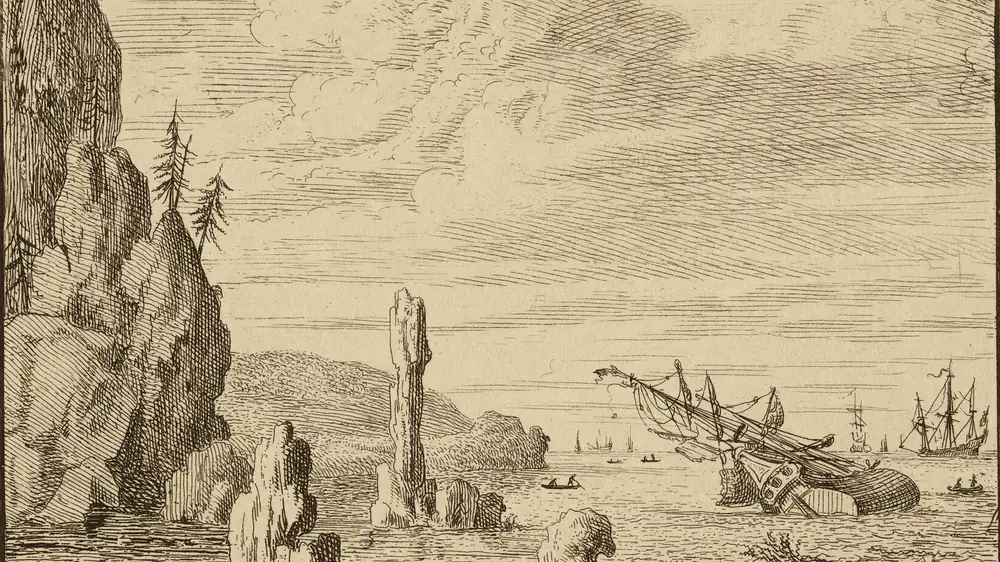
Henry Jennings was a respectable man before he was a pirate. He came from a Bermuda family, held property in Jamaica, and commanded the sloop Barsheba. In 1715 the governor of Jamaica, Lord Archibald Hamilton, gave him a commission to cruise against pirates. That summer a hurricane wrecked the Spanish treasure fleet on the coast of Florida. The Spanish set up a camp on the beach and began bringing up the silver with divers. See The 1715 Treasure Fleet.
The raid on the camp
Jennings and another commissioned captain, John Wills of the Eagle, sailed for the wreck coast with a few hundred men. Around the turn of 1716 they landed near the Spanish salvage camp and marched on it under arms. The Spanish officer in charge asked if this was war. They said no, they had come to fish the wrecks. He offered them 25,000 pieces of eight to leave. They took everything instead: by their own count more than 120,000 pieces of eight, plus worked silver and some small cannon. Later writers raised the figure much higher. The men who carried it off included Charles Vane.
Spain protested to London, since Britain and Spain were at peace. The raid became a diplomatic scandal, Hamilton was removed as governor, and Jennings found he could not safely go back to Jamaica.
To Nassau
So he went to New Providence. Jennings and his men brought their silver into Nassau, where there was no governor to ask where it came from. Their money helped turn a ruined harbour into a pirate base. Merchants and traders came to sell to the crews, and other captains followed. In April 1716, at Bahía Honda on the coast of Cuba, Jennings captured a French ship, the St. Marie, with a large cargo of coin. While he was busy, Samuel Bellamy and Paulsgrave Williams slipped in and made off with a large share of it.
In Nassau Jennings was one of the senior men, often set against Benjamin Hornigold. Jennings had a privateer’s outlook. He saw himself as a man at war with Spain, not with everyone, and he did not like being called a pirate.
The pardon
When news of King George I’s pardon reached the Bahamas in early 1718, Jennings was among the first to take it. He sailed to Bermuda and surrendered there. Many Nassau men followed his lead. When Britain went to war with Spain again later that year, he went back to sea as a legal privateer. After that the record of him thins out, and his later life and death are not known for certain.
In the game
Henry Jennings is Black Sam Bellamy’s starting Quartermaster: he adds 15% to the silver from every fight. See the Bellamy captain guide.
Sources and further reading
- Colin Woodard, The Republic of Pirates (2007), on the salvage-camp raid and Nassau in 1716–18.
- Calendar of State Papers, Colonial: America and West Indies, vol. 29 (1716–1717), Spanish complaints and Jamaica depositions on the raid.
- David Cordingly, Under the Black Flag (1995).
- Captain Charles Johnson, A General History of the Pyrates (1724), introduction (its account of the raid is exaggerated).