The King’s Pardon of 1717
“Taking the paper.”
The wiki mixes real history with the invented world of Free Nassau. Historical figures and dates are noted as such; invented characters, places and events belong to the game’s setting.
| At a glance | |
|---|---|
| Issued | 5 September 1717, by King George I |
| Covered | Piracies committed before 5 January 1718 |
| Condition | Surrender to a colonial governor or deputy within a set time |
| Brought to Nassau | February 1718, by HMS Phoenix under Captain Vincent Pearse |
Why a pardon
By 1717 the Crown had a problem it could not solve with warships alone. Several hundred pirates, perhaps more than a thousand at the peak, were using Nassau as a base, and the Royal Navy had only a handful of ships in American waters to guard thousands of miles of coast. Hanging every pirate was impossible. Dividing them was not. The government chose a policy that would recur for decades: offer mercy first, and use force on whoever refused it.
The proclamation
King George I’s Proclamation for Suppressing of Pirates was issued on 5 September 1717. It promised a pardon for all piracies committed before 5 January 1718 to any pirate who surrendered to a governor or deputy governor of a British colony, or to a designated official at home, within a fixed period, roughly a year. It also set rewards for capturing pirates who did not surrender: substantial sums for a captain, smaller amounts for lieutenants, masters, quartermasters and others down to ordinary crewmen. A pirate who turned in his own captain could claim the reward himself. The deadlines were later extended by a further proclamation.
The Phoenix at Nassau
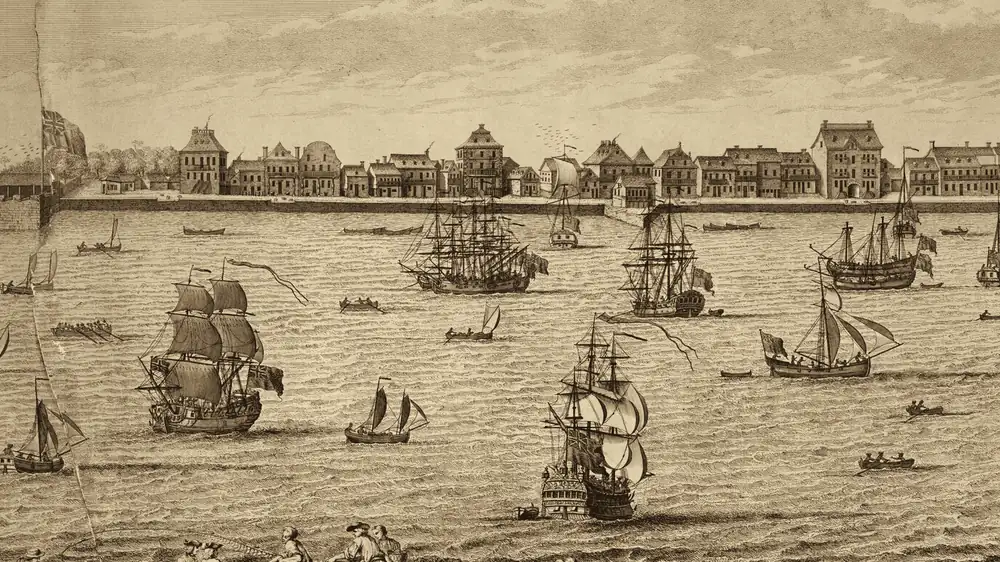
Copies of the proclamation crossed the Atlantic in late 1717, and rumours of it reached Nassau before any official did. In February 1718 the frigate HMS Phoenix, under Captain Vincent Pearse, anchored off the harbour and read the proclamation to the assembled crews. The response was mixed but significant. Over the following weeks more than two hundred men came forward and received certificates of surrender, among them leading captains such as Benjamin Hornigold and Henry Jennings. Pearse could protect them only while he was in port, and after he left, many of the pardoned men stayed in Nassau, uncertain how long the paper would protect them.
Taking the paper
Every captain made the choice for his own reasons. Some had wealth to keep and families to return to. Some were tired of the sea, or of the risk. Some had never wanted to attack English ships and saw the pardon as a return to privateering in all but name. Others accepted it cynically, intending to go back on the account once the Crown’s ships were gone. A few, led by Charles Vane, rejected it outright. Even Blackbeard took the pardon in North Carolina in 1718, only to return to raiding within months.
After the pardon
When Woodes Rogers arrived as governor in July 1718 he brought a fresh offer, and most of the men still in Nassau accepted it. The pardon’s real effect was not that pirates stopped being pirates overnight. It was that the community lost its unity. Some former pirates now worked for the governor. Others informed on old companions. The hangings at Nassau in December 1718 showed what waited for those who broke their word. Within a few years the great Bahamas haven had dissolved, and later pirate companies, such as those of Bartholomew Roberts, operated with no safe harbour of their own.
In Free Nassau
The pardon is the background pressure of the whole setting. In the wiki’s version of Nassau, every captain who takes the paper thins the harbour and weakens the common defence, and the pardoned veterans who return as hunters become the hardest enemies of the voyage. See Nassau City Ledger and World Threads.