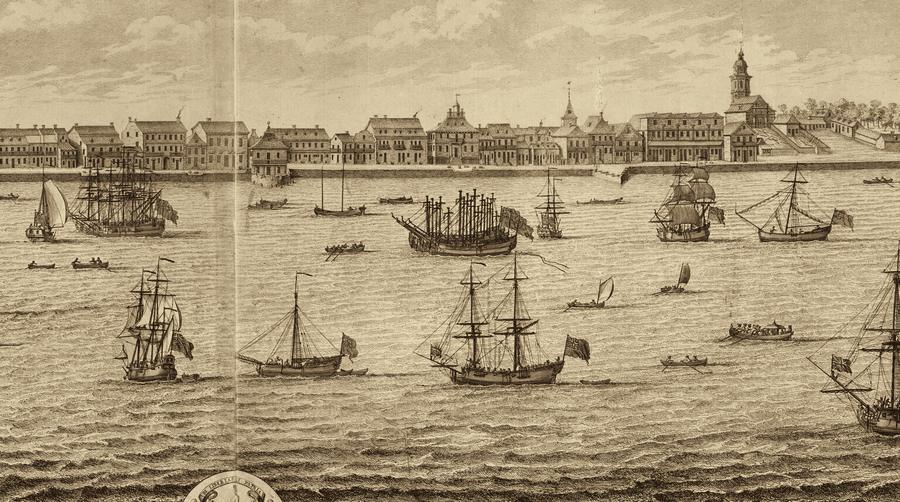
Nassau and New Providence, the Bahamas, and the ports and routes of the wider Caribbean.
| Place | Description |
|---|
| Nassau | The great harbour town of New Providence: a large, crowded port of warehouses, taverns, markets and merchant houses, and the centre of the Bahamian pirate community. |
| Nassau Harbour & Roadstead | Shallow turquoise water turning muddy green in the disturbed shallows, with the Bahama Banks reef beyond. The roadstead holds sloops and heavier brigs beneath a patchwork of black flags. |
| The Long Jetty | Weathered, sun-bleached planks at the main landing, busy with sailors, boats and waterfront traffic. |
| The Waterfront & Warehouse Row | Coral-stone warehouses, some half-finished and some half-ruined, among tents, palm-thatch huts, cook-fires, market stalls, a molasses still, and torches along the sand at night. |
| The Hog’s Head | Low-ceilinged waterfront tavern, smoky and crowded with sea-stained men. Music, cheap rum and news from the harbour make it a natural meeting place. |
| The Old Fort (Fort Nassau) | Fort on the rise above town, sacked in the 1703 Franco-Spanish raid and never properly rebuilt. Its crumbling walls and few serviceable guns overlook the harbour. |
| Hog Island | Long, low island across the mouth of Nassau Harbour. It shelters the anchorage but leaves a channel at either end. |
| The Careening Beach | Shelving beach on Hog Island’s sheltered inner shore, where vessels can be run aground and hove down for scraping and graving. |
| Alannah’s Warehouse (East Side) | Long, low coral-stone warehouse with heavy shutters, hired guards, a narrow office, a strongbox and island maps. |
| The Bookbinder’s Shop (Old Market) | Narrow one-room shop opening onto a lane in Nassau’s old market. |
| The Quiet Inn | Small, quiet inn set back from the waterfront, with a downstairs common room and rooms above. Its name is not established. |
| The Fork in the Track | A fork in a sandy track: one branch leads toward the taverns, the other climbs past the fort to the larger houses above town. |
| The Storehouse Site | Ground inland from the waterfront suitable for permanent stores and civic works. |
| The Eastern Slopes | Open ground with good aspect and natural runoff, suitable for terraces and irrigation. |
| The Western Cove | Secluded white-sand cove on the western shore, sheltered by rock formations. Poor soil and no harbour keep it quiet and little used. |
| New Providence | The island on which Nassau stands, with fresh water, scrub woods, salt ponds, and a sheltered anchorage behind Hog Island. |
| Place | Description |
|---|
| Andros | Largest Bahamian island, west of New Providence; pine and hardwood forest, creeks and mangroves provide timber and shelter. |
| Eleuthera | Long island east of New Providence, with small settler communities, farms and timber. |
| Harbour Island | Small settled island off northern Eleuthera, home to fishermen, farmers and wreckers wary of pirate activity. |
| Crooked Island | Southern Bahamian island on the Crooked Island Passage, along routes linking the islands with the wider Caribbean. |
| The Salt Ponds (Exumas & Turks) | Shallow salt pans raked in the dry season by armed Bermudian crews. Salt is essential for preserving meat and fish. |
| The Devil’s Teeth | Reef south of the upper Florida Keys, marked as foul ground on Spanish charts; clear water over coral heads and wrecks in a few fathoms. |
| The Dry Tortugas | Remote keys west of Florida, a landmark on the approaches to the Gulf of Mexico. |
| The 1715 Wreck Coast (Florida) | Where a hurricane wrecked the Spanish treasure fleet in July 1715. Spanish salvors and raiders worked the wrecks afterward. |
| The Florida Straits | Channel between Florida and Cuba, a principal route for treasure-fleet traffic and Caribbean shipping. |
| Place | Description |
|---|
| Havana | Major Spanish port and centre for treasure fleets, merchant houses and the guarda costas. |
| Port Royal | Jamaica’s former buccaneer capital, partly destroyed by the 1692 earthquake; later an Admiralty, naval and judicial centre. |
| Jamaica | English colony and centre of British authority in the Caribbean. |
| The Windward Passage | Strait between Cuba and Hispaniola, a crossroads for French and Spanish shipping. See the briefing. |
| Saint-Domingue | French colony on Hispaniola, with ports and privateering activity close to the Windward Passage. |
| Charles Town (Carolina) | Important South Carolina port, with a rice and deerskin trade and merchants who sometimes bought pirate goods. |
| Newport (Rhode Island) | New England port whose merchants traded widely and could supply provisions, powder and canvas. |