Woodes Rogers
Pirates expelled, commerce restored.
The wiki mixes real history with the invented world of Free Nassau. Historical figures and dates are noted as such; invented characters, places and events belong to the game’s setting.
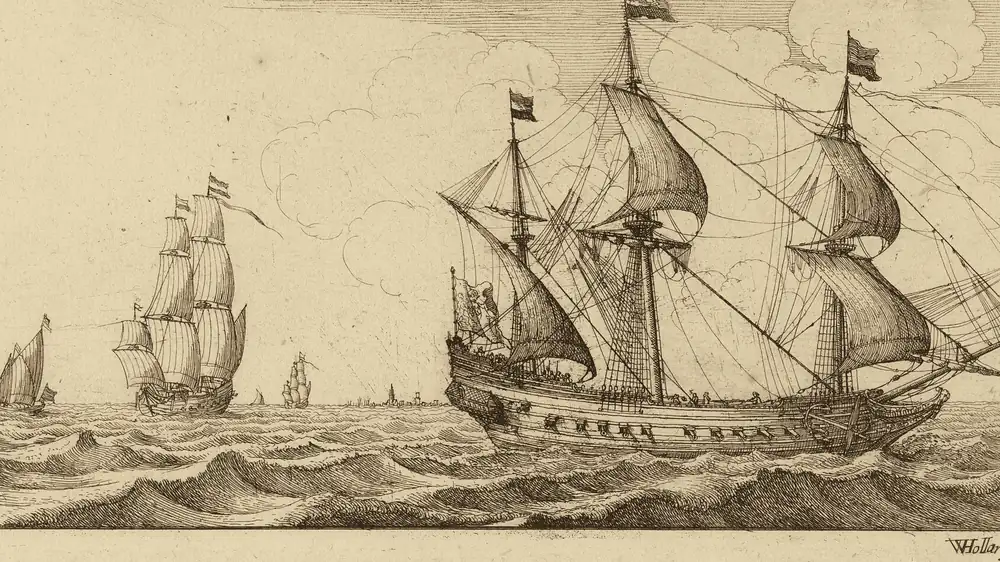
| At a glance | |
|---|---|
| Born | About 1679, England |
| Known for | Privateering voyage round the world (1708–1711); Royal Governor of the Bahamas (1718–1721, 1729–1732) |
| Book | A Cruising Voyage Round the World (1712) |
| Died | 15 July 1732, Nassau |
The circumnavigator
Woodes Rogers came from a seafaring family in the English West Country and became a merchant captain in Bristol. In 1708, during the War of the Spanish Succession, a group of Bristol merchants sent him out in command of two privateers, the Duke and the Duchess, to raid Spanish shipping in the Pacific. The voyage lasted three years and went around the world. Early in 1709 his ships called at the island of Juan Fernández off Chile and found Alexander Selkirk, a Scottish sailor who had been marooned there alone for more than four years. Selkirk’s story is widely believed to have helped inspire Robinson Crusoe.
Later in 1709, off the coast of Mexico, Rogers captured a Manila galleon, the Nuestra Señora de la Encarnación y Desengaño. He was badly wounded in the face during the fighting and wounded again in a second action against a larger galleon. He returned to England in 1711 a famous man, and his account of the voyage, A Cruising Voyage Round the World, sold well. The profits, however, were consumed by disputes and lawsuits among the investors and crews.
A plan for the Bahamas
By 1717 the Bahamas had become a scandal in London. Merchants complained of losses across the Caribbean and along the American coast, and the islands’ proprietors had no government there to speak of. Rogers proposed to lease the colony, restore order and make it profitable. The Crown appointed him Royal Governor and Captain-General, and he sailed with settlers, soldiers and a naval escort, carrying a renewed offer of the King’s pardon.
Arrival at Nassau
Rogers reached Nassau in late July 1718. On the first night Charles Vane sent a burning ship among his vessels and escaped to sea the next morning, but most of the remaining pirates accepted the pardon. Rogers read his commission, formed a council, organised militia companies and set men to work rebuilding Fort Nassau, which had been in ruins since the 1703 Franco-Spanish raid. He then made pardoned captains, including Benjamin Hornigold, into pirate hunters. In December 1718, after a trial at Nassau, eight men who had returned to piracy were hanged on the waterfront.
Holding the colony
Rogers’s first government was a constant struggle. Fever killed many of his settlers and soldiers, supplies from England were irregular, and some pardoned men drifted back to the sea. Britain declared war on Spain in December 1718, and a Spanish expedition against Nassau was expected for months. When an attack came in 1720, the rebuilt defences and the colony’s armed men turned it away. Rogers had spent heavily from his own resources, and he returned to England in 1721 deep in debt. For a time he was imprisoned for it.
Second term and legacy
His reputation recovered, helped by the publication of histories that credited him with ending the pirate republic. In 1729 he was appointed governor again, and he died at Nassau in July 1732. The motto adopted for the colony’s seal, Expulsis Piratis, Restituta Commercia (“Pirates expelled, commerce restored”), sums up how the Crown wanted his work remembered.
In Free Nassau
Rogers is the shadow over every voyage. The game’s act structure follows the squeeze he represents: pirate-hunter squadrons at the end of Act I, armed resistance along the Treasure Coast, and a final reckoning with Hornigold, his most famous recruit. See Factions & Politics and World Threads.