Nassau’s Trade & Economy
A pirate port lives or dies by its market.
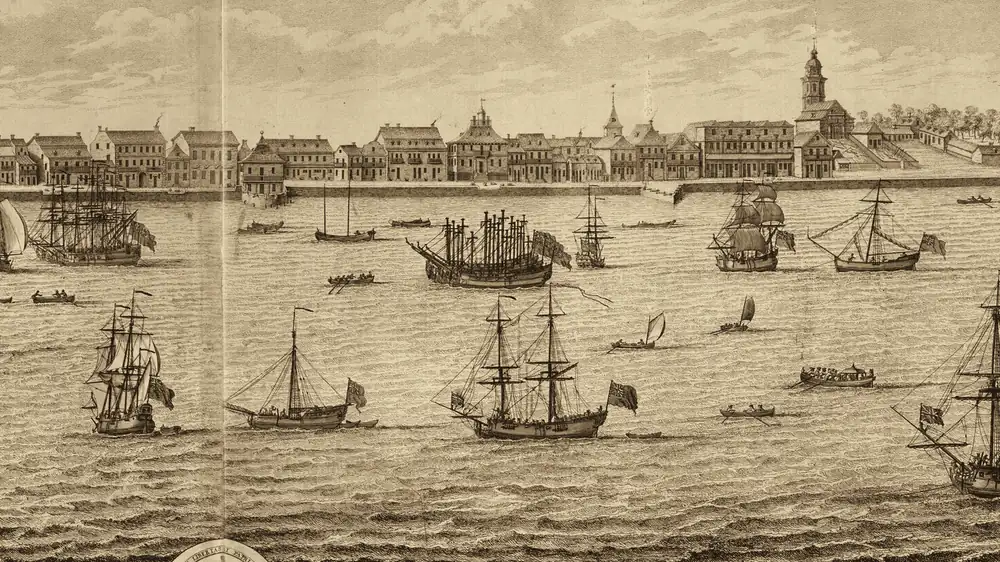
This page mixes documented history with the game’s setting, in which Nassau is a large, established port city with a busy harbour.
Why trade mattered
Plunder was only useful if it could be turned into something else. A hold full of indigo or sugar could not feed a crew, repair a mast or reload a gun. Pirates needed merchants who would buy stolen goods without asking questions and sell them what they needed in return: food, drink, powder, shot, canvas, cordage, tar, tools and clothing. The success of the Nassau haven depended as much on these trading links as on the skill of its captains.
Fences and colonial merchants
Traders from Rhode Island, New York, Pennsylvania, the Carolinas and other colonies sailed to the Bahamas to deal with pirate companies, and colonial officials complained about it constantly. The merchants bought plunder well below its market value and resold it at home or in other islands, where its origins could be hidden. In exchange they brought provisions and naval stores, often at high prices. A good fence was valuable to a pirate company, and a reliable market was one of the main reasons a crew returned to the same harbour.
Money
The common coin of the Caribbean was Spanish silver, above all the peso of eight reales, the “piece of eight.” It was often cut into pieces to make change, the origin of “bits.” Gold doubloons and pistoles circulated as larger coins, and English guineas and shillings also appeared, though coin of any kind was often in short supply in the colonies. Much trade was carried on by barter, credit or bills. A pirate share might be paid in coin, in goods, or in a mixture of both, which then had to be sold ashore.
Goods of the region
- Sugar, rum and molasses: the great products of Jamaica, Barbados and the other sugar islands, and the most common cargoes taken at sea.
- Indigo, cocoa and hides: valuable Spanish and French colonial exports, compact enough to be worth stealing.
- Logwood: a dye wood cut along the coasts of Central America, the basis of a rough frontier trade.
- Salt: raked from shallow ponds in the Bahamas and the Turks Islands, mainly by Bermudian crews, and essential for preserving meat and fish.
- Timber: pine and hardwood from Andros and other islands for building and ship repair.
- Wrecked goods: the reefs of the Bahamas and Florida caught many ships, and wrecking, the salvaging of cargo from them, was an old island trade.
Provisioning a port
A pirate company in port needed fresh water, firewood, meat and fruit, and the islanders and small traders who supplied them could do well. Fishing, turtling and small farms on New Providence and the out-islands fed the town. Taverns, rum sellers, boat builders and carpenters all profited from crews with money to spend. At the same time, the town was vulnerable: a few weeks without trade could mean real shortage, and anything that frightened merchants away hurt everyone.
The end of the boom
When Woodes Rogers arrived in 1718, he aimed to turn Nassau into an ordinary colonial port, living by lawful trade, salt, timber and provisioning. The motto adopted for the colony, “Pirates expelled, commerce restored,” put the point plainly. See also Nassau City Ledger and Places & Sea Lanes.
In Free Nassau
Ports, smugglers’ coves and shipwrights are where plunder becomes power: gunpowder, rations, repair kits, new cards, hull upgrades and officers. Banked Silver from voyages you survive funds a Shipyard, Powder House and Harbour Tavern in Nassau, giving future runs a head start. See How to Play.