Calico Jack, Anne Bonny & Mary Read
One stolen sloop, one autumn, and a trial that made legends.
The wiki mixes real history with the invented world of Free Nassau. Historical figures and dates are noted as such; invented characters, places and events belong to the game’s setting.
| At a glance | |
|---|---|
| Active | Rackham about 1718–1720; Bonny and Read 1720 |
| Vessel | The sloop William, taken from Nassau harbour in August 1720 |
| Captured | Off Negril Point, Jamaica, late October 1720 |
| Trials | Spanish Town, Jamaica, November 1720 |
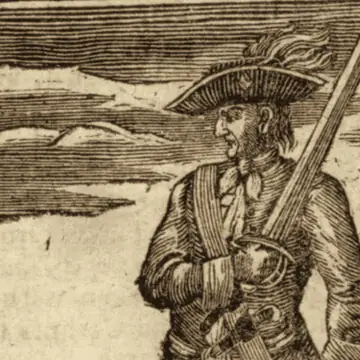
John Rackham
John Rackham’s nickname, “Calico Jack,” is usually explained by a taste for clothes of calico, a bright printed cotton cloth. He served as quartermaster to Charles Vane, and in November 1718, when Vane’s crew voted their captain out for refusing to fight a French warship, they elected Rackham in his place. His command was brief and not very profitable. In 1719 he returned to Nassau and accepted the King’s pardon from Woodes Rogers, whose government had by then made the harbour an English colonial port again.
Anne Bonny
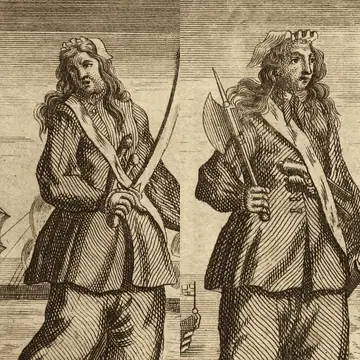
Anne Bonny’s early life is known mainly from Captain Charles Johnson’s General History of the Pyrates, and parts of that account may be embroidered. It says she was born in Ireland, raised in Carolina, and married a sailor named James Bonny, with whom she came to Nassau. There she met Rackham. In August 1720, with a small group of former pirates, they seized the sloop William from Nassau harbour and put to sea. Rogers issued a proclamation naming Rackham, Bonny and their companions as pirates and enemies of the Crown.
Mary Read
Mary Read’s story, again largely from Johnson, is even more remarkable. She is said to have been raised in England dressed as a boy, to have served as a soldier in Flanders, and later to have gone to sea in men’s clothing. She was aboard a ship taken by pirates and joined them, and in 1720 she was among Rackham’s crew. Witnesses at the trial said that both women wore practical seamen’s jackets and trousers during attacks, handled weapons, and were as active as any of the men aboard.
The cruise and the capture
The William’s cruise lasted about two months. Rackham’s company took fishing boats and small trading vessels around the Bahamas and the coast of Jamaica. They were not a large or powerful crew. Late in October 1720 a sloop commanded by Captain Jonathan Barnet, carrying a commission from the governor of Jamaica, found the William at anchor off Negril Point. The pirates had been drinking with men they had met ashore. Barnet’s men attacked by night, and most of Rackham’s crew offered little resistance. Witnesses later claimed that Bonny and Read were among the few who fought.
The trials
Rackham and his men were tried at Spanish Town in November 1720, and Rackham was hanged at Gallows Point, Port Royal, on 18 November. His body was hung in chains on a small cay at the harbour mouth, still known as Rackham’s Cay. Bonny and Read were tried separately later that month. Both were convicted and sentenced to death. Both then declared that they were pregnant, and execution was stayed. Mary Read died in prison in Jamaica in 1721. What happened to Anne Bonny is unknown. Later stories about her release, marriage and long life in the Carolinas have never been confirmed.
The legend
Very few women are known to have sailed as pirates in this period, which is one reason the trial attracted so much attention. Johnson’s book, published only four years later, gave them full chapters, and they have been retold in plays, novels and films ever since. The historical record is thin, and separating evidence from embellishment is part of their story.
In Free Nassau
Anne Bonny and Mary Read share one captain card and specialise in hand-to-hand fighting and duels, so their decks shine once the grapples are across. Calico Jack Rackham is an unlockable captain, played as a fast raider. See How to Play and Characters.