Rum, Punch and Waterfront Taverns
History · sources at the end · the game’s fiction is kept separately
Where plunder became coin, and coin became rum.
| Rum origins | Barbados sugar plantations, about the 1640s–1650s |
| Old names | Kill-devil, rumbullion |
| Punch | Spirit, citrus, sugar, water and spice |
| Tavern roles | Drinking, lodging, markets, recruiting |
Kill-devil
Rum was a by-product of sugar. On the plantations of Barbados in the mid-1600s, enslaved workers boiled cane juice into sugar, leaving molasses and skimmings. Fermented and distilled, these made a fierce spirit. A visitor to Barbados around 1651 described a drink called “rumbullion” or “kill-devil”, “a hot, hellish and terrible liquor”. By 1700 rum was made across the English Caribbean and in New England, where distillers turned imported molasses into rum for the fisheries and the slave trade.
Punch
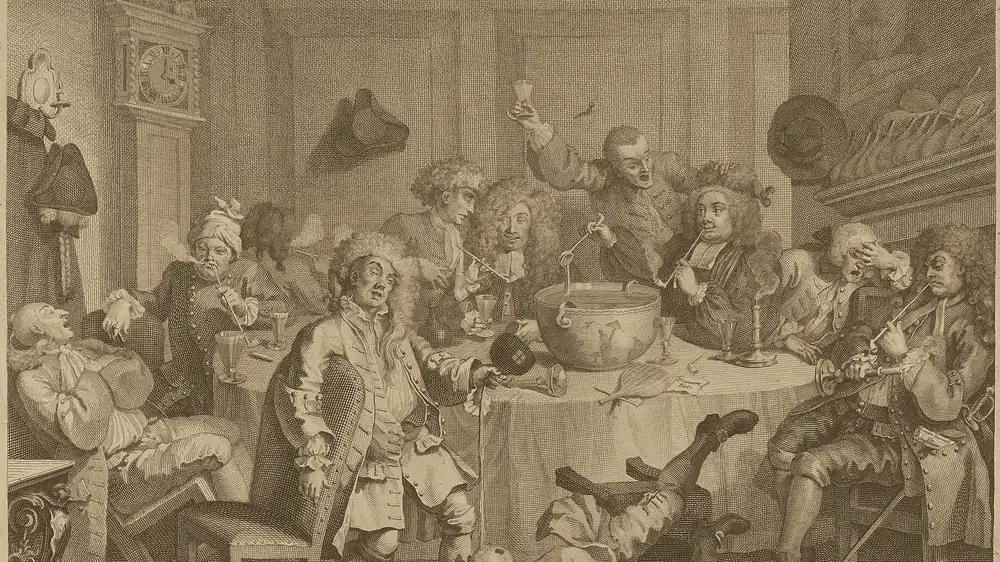
Punch probably came to England from India through East India Company sailors. The word may come from the Hindi panch, “five”, for its ingredients. In the Caribbean it was made with rum, lime or lemon juice, sugar, water and spices such as nutmeg, mixed in a large bowl and shared. Punch houses and punch bowls were a central part of colonial social life.
Taverns in pirate ports
In Port Royal before 1692 there were about a hundred drinking houses (see Port Royal). In Nassau during the Republic of Pirates there were only rough huts and tents on the waterfront, but they did a roaring trade. Taverns were where pirates spent their shares, where sailors heard which captains were recruiting, and where plunder was sold to dealers. See Nassau’s Trade & Economy.
Games and gambling
Taverns were also places of play. Dice, cards, draughts and Morris boards were common, and stakes could be high. Several pirate crews banned gambling for money aboard ship to keep the peace, but ashore anything went. See Tavern Games of the Pirate Era.
Drink and the end of pirates
Drink caught many pirates. Johnson says the crew of Bartholomew Roberts were mostly drunk when HMS Swallow attacked them at Cape Lopez in 1722. Rackham’s crew were reportedly drinking when Jonathan Barnet caught them in 1720. Roberts himself was said to drink only tea.
Rum and the navy
The Royal Navy adopted rum as an official ration in the Caribbean. In 1740 Admiral Edward Vernon ordered it mixed with water and lime juice, and sailors named the drink grog after Vernon’s grogram coat. The navy’s daily rum ration lasted until 1970. See Food and Daily Life Aboard.
Taverns as markets
For pirates, taverns were also shops. Silks, spices, sugar, tobacco and slaves taken at sea were sold to merchants who met them over drinks. Prices were low, because the pirates needed to sell fast. In the 1690s New York and Rhode Island tavern keepers and merchants dealt openly with crews back from the Pirate Round. Officials often drank in the same rooms. Governors sent to stop the trade complained that juries would never convict the local men who had grown rich by it.
In the game
The Tavern is Free Nassau’s waterfront: four games, real pirate opponents, and tavern silver to win.
Sources and further reading
- Frederick H. Smith, Caribbean Rum: A Social and Economic History (Florida, 2005).
- Richard Ligon, A True and Exact History of the Island of Barbados (London, 1657).
- Peter Thompson, Rum Punch and Revolution (Pennsylvania, 1999).
- David Wondrich, Punch: The Delights (and Dangers) of the Flowing Bowl (Perigee, 2010).
Category: Life and customs · History