Tavern Games of the Pirate Era
History · sources at the end · the game’s fiction is kept separately
The board was carved into the table, and the stakes were real money.
| Board games | Draughts, Nine Men’s Morris, backgammon (“tables”), Fanorona in Madagascar |
| Dice | Hazard, the ancestor of craps |
| Cards | Whist, all-fours, piquet, and many betting games |
| At sea | Banned for money by several crews’ articles |
Draughts
English draughts, called checkers in America, was played on the 8×8 chessboard with twelve pieces a side. It took its modern form in Europe by the 1500s, when the rule that captures are compulsory was added. The first book on the game in English, William Payne’s Introduction to the Game of Draughts, came out in 1756, but the game was already common in English and colonial taverns long before. Boards were often scratched or painted onto tabletops, and pieces were coins, buttons or wooden discs. See Tavern Draughts, where Howell Davis and Edward Low wait at the board.
Nine Men’s Morris
Nine Men’s Morris is far older. A board said to be cut into a temple roof at Kurna in Egypt is often claimed as the oldest, though its date is disputed. Medieval boards are scratched into the cloister benches and stones of English cathedrals and churches. Each player places nine pieces, then moves them, trying to form a line of three, a “mill”, which removes an enemy piece. Shakespeare mentions the “nine men’s morris” filled with mud in A Midsummer Night’s Dream, meaning boards cut into village greens. Sailors could scratch one on any hatch cover. See Tavern Morris, with Walter Kennedy and William Kidd.
Fanorona
Fanorona is the traditional strategy game of Madagascar, played on a grid of 9 by 5 points joined by lines and diagonals. Its captures by approach and withdrawal, which remove whole lines of enemy pieces, are unlike any European game. It is related to the Arab and Indian game alquerque. Its early history is uncertain, and Malagasy tradition dates it to the 1600s. It was certainly played on the island the pirates of the Pirate Round knew. Whether any pirate ever learned it is not recorded, so the Tavern Fanorona table with Thomas Tew and Henry Every is Free Nassau’s own imagining.
Dice and cards
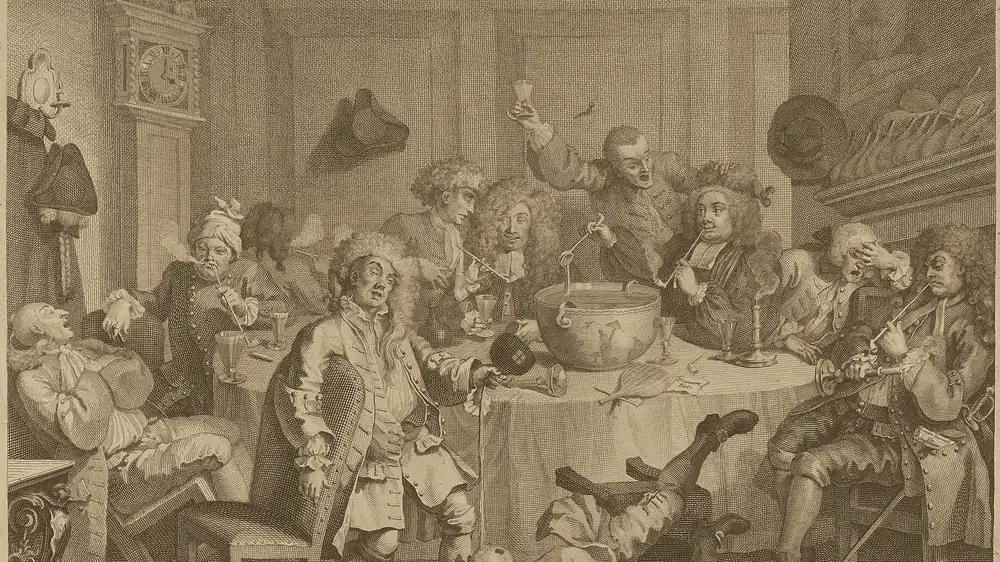
Money games were everywhere. Hazard, a dice game with complicated odds, was the great gambling game of English taverns and the ancestor of craps. Card games ranged from whist and all-fours to quick betting games. Pamphlets of the period complain of sailors losing a voyage’s wages in a night ashore. In ports like Nassau, Port Royal and Charles Town, taverns, gambling and the sale of plunder went together. See Nassau’s Trade.
Why pirates banned gambling
Several crews wrote the risk into their articles. According to the General History, Bartholomew Roberts’s articles said: “No person to game at cards or dice for money.” Gambling debts led to fights, and fights at sea could split a company. Games for fun were another matter, and boards cut into decks and benches survive from many ships of the period.
Minesweeping with powder
Free Nassau’s Powder Keg Sweeper is a modern logic puzzle in period dress, not a period game. Its theme is real, though. Gunpowder was stored in a ship’s magazine under strict rules: no fire, no iron nails, and copper or wooden tools. A single spark below decks could destroy a ship. HMS Edgar blew up at Spithead in 1711 with the loss of most of her crew.
In the game
Draughts, Morris and Fanorona are all at the Tavern, each against a real pirate of the age. Easy is free play; Hard lets you wager tavern silver.
Sources and further reading
- Captain Charles Johnson, A General History of the Pyrates (London, 1724). Project Gutenberg.
- H. J. R. Murray, A History of Board-Games Other Than Chess (Oxford, 1952).
- R. C. Bell, Board and Table Games from Many Civilizations (Oxford, 1960).
- Peter Thompson, Rum Punch and Revolution: Taverngoing and Public Life in Eighteenth-Century Philadelphia (Pennsylvania, 1999).
- William Payne, An Introduction to the Game of Draughts (London, 1756).
Category: Life and customs · History