Salt and Wrecking in the Bahamas
History · sources at the end · the game’s fiction is kept separately
The reefs that wrecked ships also fed the islanders.
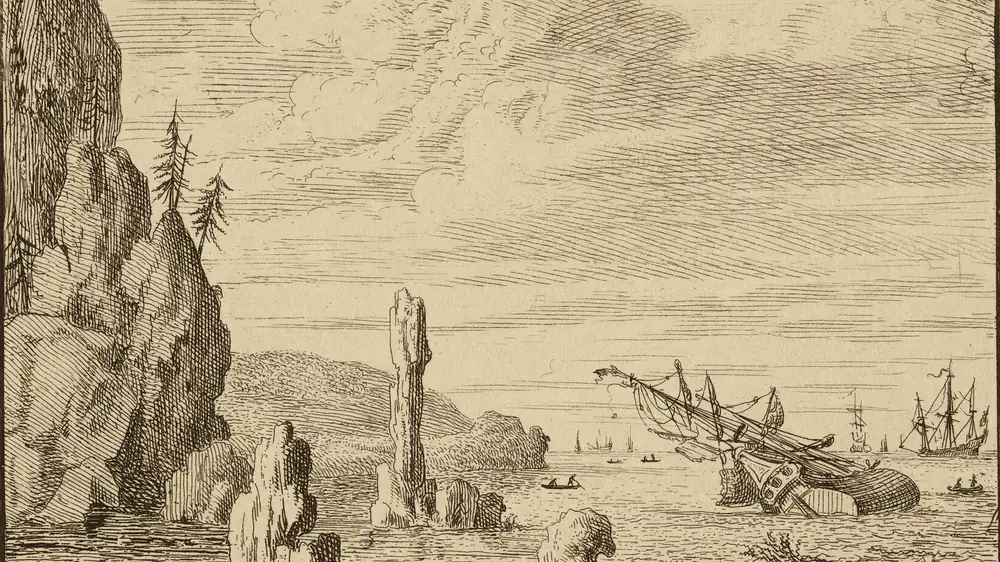
| Main trades | Salt raking, wrecking (salvage), timber, turtle |
| Salt islands | Exuma, Long Island, the Turks Islands |
| Danger | Shallow banks, reefs and hurricanes |
| Link to piracy | Wreckers, smugglers and pirates were often the same men |
Poor islands, busy waters
The Bahamas around 1700 were thin-soiled, low and dry. The few hundred settlers of New Providence and Eleuthera could barely farm. But the islands sat beside one of the busiest sea lanes in the Americas. The Florida Straits and the Old Bahama Channel carried Spanish silver home, and English ships ran between Jamaica and the mainland colonies. The islanders made their living from the sea itself.
Salt
Salt was essential for preserving fish and meat. In shallow ponds on Exuma, Long Island, Inagua and the Turks Islands, the sun evaporated seawater and left crusts of salt, which men raked into heaps. Bermudian sloops came every season to rake salt in the Turks Islands and carry it to the mainland colonies. Salt was hard, hot work, but needed no capital beyond a rake and a boat. See Nassau’s Trade & Economy.
Wrecking
The Bahama Banks were a graveyard. Ships misjudging their longitude (see Navigation) ran onto reefs and shoals. Bahamians went out in small sloops to save crews and cargo, and to claim a share as salvage. Wrecking was legal and dangerous, and divers held their breath to work on sunken hulls. Some wreckers were accused of luring ships ashore with false lights, though historians find little evidence of this. Wrecking taught the islanders every channel and cay, knowledge that pirates later used.
The treasure fleet
The great wreck of the age came in July 1715, when a hurricane drove the Spanish treasure fleet onto the Florida coast. Spain set up a salvage camp. Henry Jennings and other Jamaican and Bahamian sailors raided it, and wreckers and divers flocked to the site. Many stayed on as pirates. See The 1715 Treasure Fleet.
After the pirates
When Woodes Rogers took control in 1718, he tried to turn Nassau to honest trade: salt, timber, and fishing. Wrecking stayed central to Bahamian life for well over a century. In the 1800s Bahamian wreckers worked the Florida Keys, and the trade only faded once lighthouses lit the reefs.
Logwood and timber
Bahamian sloops also cut timber, especially hardwoods such as mahogany and lignum vitae, and carried it to Charles Town and New England. Many Bahamian and Jamaican sailors also worked as logwood cutters in the Bay of Campeche and the Bay of Honduras, where the dyewood grew. Spain treated the cutters as trespassers and attacked their camps, and men pushed out of the logwood trade were another source of recruits for the pirates.
Who lived there
The Bahamian population was mixed from the start. There were settlers from Bermuda, the Eleutheran Adventurers of the 1640s and their descendants, free and enslaved Africans, and seamen of many nations who drifted through. In 1703 a French and Spanish raid sacked Nassau and carried off many of its people, which left New Providence almost lawless for a decade. Into that gap the pirates moved. See The Republic of Pirates.
In the game
Free Nassau’s Nassau screen grows from these trades: salt, wrecking and plunder. See the City Ledger.
Sources and further reading
- Michael Craton and Gail Saunders, Islanders in the Stream: A History of the Bahamian People, vol. 1 (Georgia, 1992).
- Michael Craton, A History of the Bahamas (Collins, 1962).
- Colin Woodard, The Republic of Pirates (Harcourt, 2007).